


 (501) 758-7665
Choosing Your Arkansas Oasis: Vinyl Liner vs. Gunite Pools
Deciding to invest in an inground pool is a thrilling milestone for any homeowner. However, once you begin the planning process, you are immediately met with a critical fork in the road: Vinyl Liner vs. Gunite Pools. In the unique climate and soil of the Natural State, this choice involves more than just aesthetics—it’s about long-term durability, maintenance, and how you plan to use your outdoor space.
At Elite Pools by Aloha, we specialize in helping Arkansas residents navigate these technical decisions. Whether you are looking for the cost-effective flexibility of vinyl or the infinite customization of gunite (concrete), understanding the pros and cons of each is essential. In this guide, we will break down which material reigns supreme for the specific needs of Arkansas homes.
* Please note that Elite Pools by Aloha only builds vinyl pools and this article is just to compare pool options for your Arkansas backyard.
1. Customization and Design Flexibility
When comparing Vinyl Liner vs. Gunite Pools, both offer surprising levels of design freedom, but they cater to different goals.
- Gunite pools are the “gold standard” for custom luxury. Because they are poured on-site, there are no limits to shape, depth, or size. If you want a beach-entry slope, a built-in cave, or a specific “L-shape” to fit a unique corner of your yard in Little Rock, gunite is your best option. Vinyl liner pools have come a long way from the basic rectangles of the past.
- Modern vinyl pools use customizable steel or polymer wall panels, allowing for a wide variety of shapes and features like tanning ledges and “wedding cake” steps. While highly flexible, they are slightly more constrained by the structural panels compared to the “anything is possible” nature of concrete.
2. Installation Speed and Weather Windows
Arkansas weather can be unpredictable. This is where the construction process becomes a major factor.
- Vinyl liner pool installations are typically faster, often completed in 4 to 8 weeks. Since the structure relies on pre-engineered panels and a custom-fit liner, the on-site “mess” is contained to a shorter window. This makes it easier to time your build between the heavy spring rains common in Northwest Arkansas.
- Gunite pools require a much longer commitment, usually 8 to 14 weeks. The process involving steel rebar, multiple inspections, and a 28-day concrete curing period means your backyard will be a construction zone for a longer duration.
3. Durability in Arkansas Soil
Arkansas is known for its diverse soil—ranging from the rocky terrain of the Ozarks to the expansive “sticky” clay in the Delta.
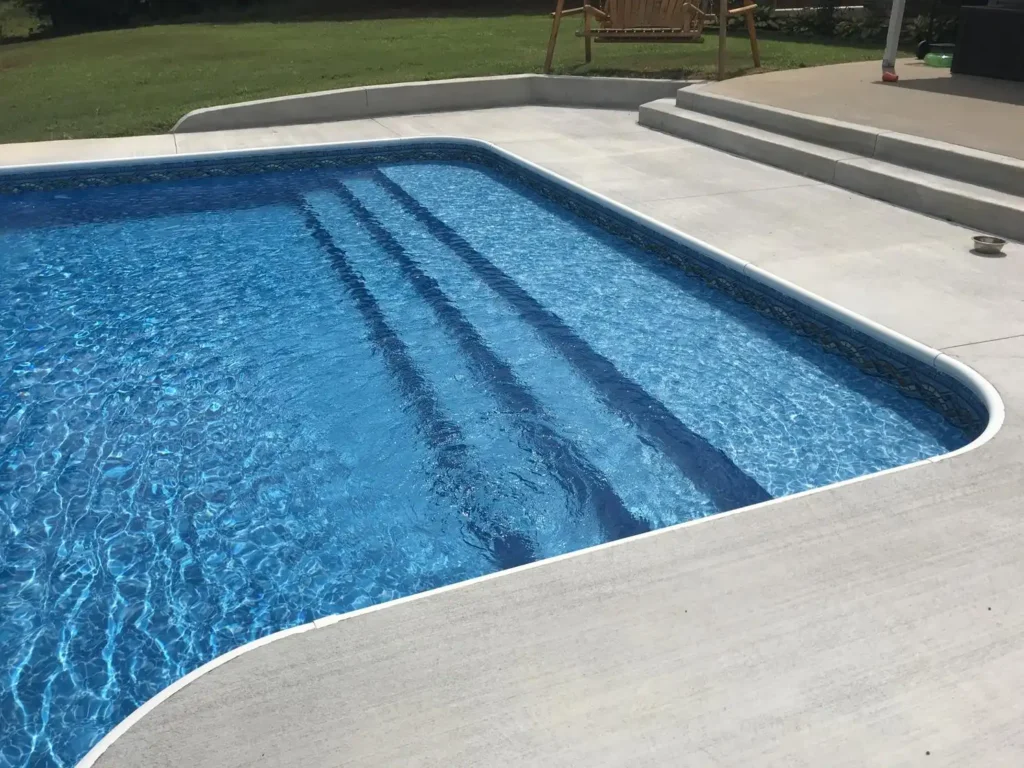
- Vinyl liners sit within a structure that can handle a degree of ground movement. Because the liner itself is a flexible membrane, it isn’t prone to the structural cracking that can plague rigid materials. However, the liner is susceptible to punctures from sharp objects or high-energy pets.
- Gunite is a rigid, heavy-duty structure. While it is incredibly strong, it can be susceptible to surface cracking if the ground shifts significantly. Advanced engineering and heavy-duty rebar schedules ensure gunite pools are reinforced specifically for Arkansas’s soil conditions. When built correctly, a gunite pool can last 50+ years.
4. Maintenance and Chemical Usage
The “feel” of your pool and how much work it takes to keep it clean are daily considerations.
- Vinyl liners offer a smooth, non-porous surface that is very gentle on swimmers’ feet and resistant to algae growth. This typically results in lower chemical usage. The trade-off? The liner will eventually need to be replaced—usually every 10 to 12 years—to keep the pool watertight and looking fresh.
- Gunite pools have a porous interior finish (plaster, pebble, or quartz). Algae can “grip” these surfaces more easily, requiring more frequent brushing. Like vinyl, gunite also requires long-term renovation; you’ll likely need to resurface the concrete every 10 to 15 years to maintain its aesthetic and structural integrity.
5. Initial Investment vs. Long-Term Value
In terms of initial cost, vinyl and gunite serve different ends of the investment spectrum.
- Vinyl Liner Pools typically offer the lowest upfront cost, making them a popular choice for families who want a high-quality backyard retreat without the premium price tag of concrete.
- Gunite Pools require a higher initial investment but are often viewed as permanent “real estate.” A custom gunite pool can significantly increase a home’s appraisal value and is often the preferred choice for high-end, architectural estates.
Which One Is Right for You?
The “better” pool depends on your priorities:
- Choose Vinyl if you want a faster installation, a smoother surface that’s easy on the skin, and a lower initial price point.
- Choose Gunite if you want a completely bespoke design, a deep end (8+ feet), or a high-end “resort” aesthetic that maximizes your home’s resale value.
Frequently Asked Questions (FAQs)
▶ Is vinyl or gunite better for salt water?
Vinyl is highly compatible with salt systems, provided the wall panels are made of non-corrosive materials like polymer. Gunite is also compatible, but you must monitor water chemistry closely to prevent the salt from wearing down the plaster finish over time.
▶ Which pool type is more pet-friendly?
Gunite with a pebble finish is the champion of pet-friendliness; dog claws won’t faze it. While modern vinyl is durable, very active or large dogs could potentially tear or puncture a liner with their claws.
▶ Does gunite last longer than vinyl?
A gunite shell is a permanent concrete structure that can last a lifetime with proper resurfacing. A vinyl pool’s structure is also very durable, but the “face” of the pool (the liner) typically needs to be replaced every 10 to 12 years.
▶ How customizable are vinyl liner pools?
Very! While gunite offers “infinite” freedom, modern vinyl pools use modular panels that allow for various shapes, sizes, and features like built-in benches, tanning ledges, and specialized steps.
▶ Which pool type is better for Arkansas soil?
Both have advantages. Vinyl’s slight flexibility is great for the shifting clay found in the Delta, while gunite pools are engineered with heavy-duty rebar to withstand the rocky terrain of the Ozarks.
Looking to build a vinyl pool? Contact Elite Pools by Aloha today to speak with a design expert and start your journey toward the perfect Arkansas oasis.