


 (501) 758-7665
How to Build a Pool on a Sloped Yard in Arkansas
A sloped backyard scares off a lot of homeowners before they even pick up the phone. They assume a hill means no pool, or at least a massively expensive one.
Arkansas earns its nickname honestly. Rolling hills and uneven lots are the norm here, not the exception, especially around Little Rock, Hot Springs, and the foothills further west. A slope doesn’t rule out a pool. It just changes how the project gets engineered.
The terrain that makes Arkansas backyards tricky is also terrain we deal with constantly. A slope changes the grading and drainage plan, and it usually means a retaining wall is part of the build. None of that makes the project impossible. It just means the site work has to be planned correctly before the pool ever goes in the ground.
What a Sloped Lot Actually Requires
Three things separate a sloped-yard build from a flat-lot build:
- A retaining wall, sized and engineered for the specific grade of your yard.
- A drainage plan, built before excavation starts, not figured out after.
- Smart use of the elevation change itself, which can work in your favor rather than against you.
Here’s how each one plays out.
Retaining Walls Do the Heavy Lifting
On a sloped lot, the retaining wall is often the single most important part of the build. It holds back the upper portion of the yard, creates a stable, level area for the pool, and manages where water goes during heavy Arkansas rain. Done right, it also gives the yard a cleaner, more finished look, since the transition between the upper and lower portions of the lot becomes intentional instead of awkward.
Our retaining wall page showcases more detail for vinyl pool installations specifically.
Drainage Planning Matters More on a Slope
This is the part most homeowners don’t think about until it becomes a problem. On a flat lot, water mostly stays put. On a sloped lot, water moves. If it moves toward your pool or your house, you end up with erosion, standing water, or worse, water getting behind the pool structure where it doesn’t belong.
Before any excavation starts, we map how water naturally flows across your property. That might mean French drains, regrading certain sections of the yard, or directing runoff away from the pool equipment pad entirely.
A Strategic Water Feature Can Work With the Grade
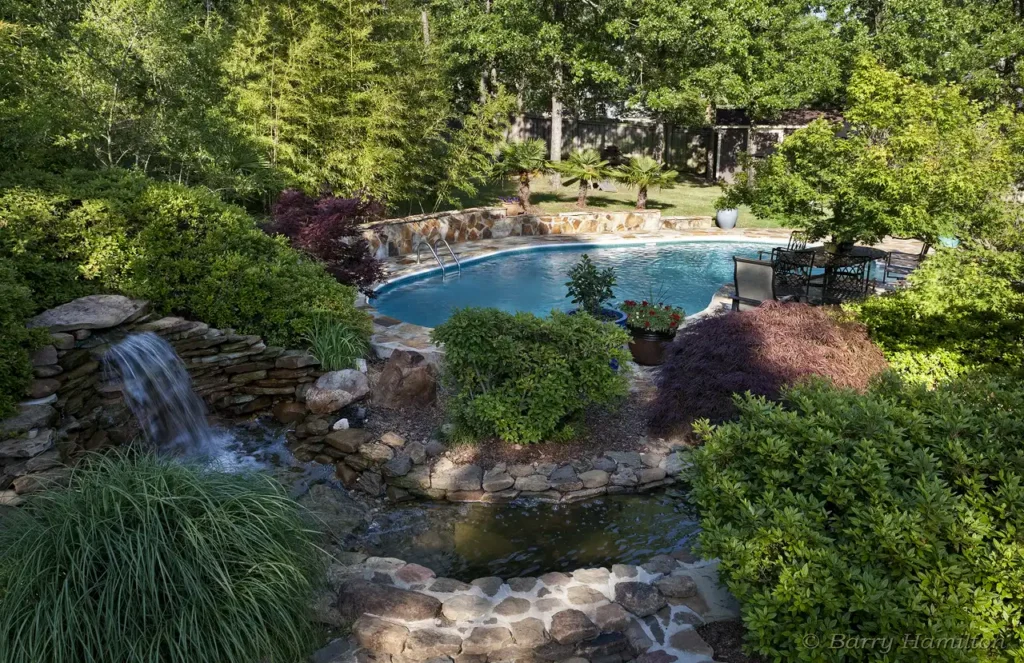
A sloped yard creates one nice opportunity: gravity. A bubbler or waterfall built into a retaining wall takes advantage of the elevation change without requiring extra pumps to force water uphill. A nice feature that adds sound and movement without becoming a maintenance project of its own.
What This Means for Your Budget
Building on a slope usually costs more than building on a flat lot. Retaining walls, extra grading, and drainage work all add to the scope.
The increase isn’t as dramatic as most homeowners assume.
And it’s almost always less expensive than fixing drainage or structural problems after the fact because corners were cut during the original build.
Frequently Asked Questions (FAQs)
▶ Is it more expensive to build a pool on a sloped yard?
Typically, yes. The need for retaining walls, additional grading, and drainage planning adds to the overall project cost compared to a flat lot. The increase is usually moderate, and proper site work upfront prevents far more expensive problems down the road.
▶ Do all sloped yards need a retaining wall?
Most do, but the size and design depend on how steep the slope is and where the pool sits relative to the grade. A site assessment determines exactly what’s needed for your specific yard.
▶ How does drainage work differently on a sloped lot?
Water naturally moves downhill, so a drainage plan has to account for where runoff goes before, during, and after construction. This can include French drains, regrading sections of the yard, or directing water away from the pool equipment pad.
▶ Can I still add a water feature on a sloped yard?
Yes. A sloped yard actually works well for simple, gravity-fed water features like a small bubbler or modest waterfall built into a retaining wall, without needing extra equipment to force water uphill.
▶ What’s the first step in building a pool on a slope?
A thorough site assessment. We evaluate the slope, soil conditions, and existing drainage patterns before any design work begins, which ensures the pool and retaining wall are engineered correctly from the start.
Why Site Assessment Comes First
Every sloped-yard project starts the same way: a thorough site assessment before any design work begins. Soil conditions, the degree of slope, and existing drainage patterns all factor into how the pool and retaining wall are engineered.
A pool built on a slope without proper engineering can develop real problems over time: shifting walls, water intrusion, erosion around the structure. Getting it right from day one is what keeps that from happening.
If you’re working with a sloped lot and want to know what’s realistic for your yard, reach out to schedule a site evaluation. We’ll walk the property with you and talk through exactly what the build would look like.